
Starting late last week we began seeing defoliation of soybean leaves due to Green Cloverworm (as pictured below).
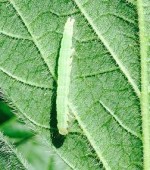
Cloverworms tend to cling to the soybean plant and I generally have to either pull or bend the soybean plant and swat it against the ground to see them after they have fallen from the plant, that or after you notice the defoliation as you are walking fields you may notice green worms on your clothing.
Cloverworms tend to be a light green color with a white stripe on both sides. If you are unsure as to if you have Cloverworm or another green worm (i.e. Cabbage Looper or Soybean Looper) touch it, if it wiggles violently you have a Cloverworm, if not you have a Looper. The reason for this importance is that some insecticides are more effective on Cloverworm than on Loopers, so you need to be more exact in you identification or risk not having acceptable control.
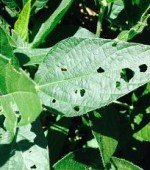
The rule of thumb that I use is if a plant has 20% or greater defoliation from Cloverworms we need to spray. The plant pictured below is around 5% defoliated.
When you add Soybean Aphids into the mix, you have another threat that is taking yield away from soybeans, even at lower numbers. It is my belief that as you extend the number of days that Aphids are on the soybean plant it acts the same as hitting a higher aphid count number. (We first noticed Soybean Aphids on June 25 on some fields.)
It is my opinion that when we couple the yield robbing defoliation from Green Cloverworms with low levels of Soybean Aphids you lower the Economic Threshold of both pests and they need to be controlled.
