Featured News

Key Reminders for Planting Soybeans

Planting Depth 1-1.5 inches deep. Planting 1” or less increases the likelihood of soybean seed not germinating due to cooler temperatures or lack of moisture.

Soybeans need to take in 50% of their weight during the germination process, by not having the proper planting depth you risk seeds not fully germinating or not having enough moisture to continue to grow. By planting 1-1.5” deep you increase the probability of having adequate moisture for germination.

Soil Temperatures Plant when soil temperatures are 55°F, or when air and soil temperatures will be increasing. Soybeans can germinate with soil temperatures at 50°F but are more consistent at 55°F or more. By planting in cooler soil temperatures you increase the likelihood of Imbibitional Chilling Injury or Cold Shock Syndrome (yes soybeans can get this too). Cool wet soils (less than 60°F) increase the likelihood seeds of a seedlings succumbing to a soil borne pathogens such as Pythium, Phytophthora and Fusarium

Seed Treatments If planting early use a quality seed treatment. A quality seed treatment will help with germination and protect the seed from early to mid-season insects such Bean Leaf Beetle, Seed Corn Maggot, Soybean Aphids and Soybean Cyst Nematodes as well as cool season diseases like Pythium, Phytophthora and Fusarium and warm season diseases such as Rhizoctonia.

Not all seed treatments are equal, just because something has a pretty color does not mean it is the best investment.

Plant Populations Recommend seeding rates are 140,000 to 155,000 in a 30 inch row. Soybeans can yield with less than 140-155,000 planting rate, the issues we encounter that suggest maintaining a higher seed rate are:

  • Less than ideal planting seedbed
  • Hail
  • Wildlife i.e. Geese, Deer etc.
  • Seed and Seedling diseases
  • Soil Types


If you have further questions or concerns regarding this contact your local Central Valley Agronomist or myself at 507-456-3034 and [email protected]
 

NitrateNow As a Best Management Practice (BMP)

The revised version of the Nitrogen Fertilizer Management Plan (NFMP) will be released the winter of 2015 in which the Minnesota Department of Agriculture will outline new regulations for nitrogen fertilizer applications. The new regulations will be based on the nitrogen best management practice (BMP) regions as well as areas that were identified to be vulnerable for groundwater contamination as illustrated in the map to the right. The Central Valley Coop territory falls in the South Central region which will restrict fall and winter application of urea and anhydrous ammonia without the use of a nitrogen inhibitor with in the vulnerable areas. The BMPs that are used for these regulations are developed by the University of Minnesota. Originally developed for Minnesota in the late 1980’s-early 1990’s, BMPs were developed as a tool to manage N efficiently, profitably, and with low environmental loss. These practices are based on hundreds of “site years” worth of University agronomic and environmental research and the understanding of the nitrogen cycle. The 2013 draft of the NFMP states that “while acknowledging that no generalized recommendations are relevant 100% of the time, BMPs represent a combination of practices that will reduce risk of excessive N loss in a normal year.” While currently these practices are promoted as voluntary, the new NFMP proposes that once farmers have been notified about specific BMPs for their region they will have three years to comply and adopt the practices before additional rules will be applied.

In 2010 the MDA partnered with the USDA National Agricultural Statistics Service (NASS) along with University of Minnesota researchers to collect information about fertilizer use and farm management practices. Approximately 1500 corn farmers from across the state were contacted for this survey over the phone. The information collected provided the MDA and University of Minnesota a benchmark of what current nitrogen management practices are.

Read more …

Nutrient Uptake by Modern Hybrids by Brian Weller

As Agronomists we have know that certain hybrids or genetic types have shown greater response to increased rates of Nitrogen (N) or split applications of Nitrogen than others.

Recent Data from Purdue has shown that today’s hybrids take up to 27% more total Nitrogen after tasseling than pre 1990 hybrids. At first thought it makes sense that as you increase yield, which has taken place since 1990 nutrient uptake will increase as well. What this study points out is that the uptake is taking place later in the growing season.

Managing nutrient uptake later in the season especially Nitrogen is easier than it has been in the past. We can’t kid ourselves, we are still at the mercy of the weather and putting a solid base rate of Nitrogen on early is still a good plan. We now have more options for applying Nitrogen products than we have in the past.

  • Sidedressing with UAN (28% or 32%) or Anhydrous Ammonia (Nh3) is still a good way to put N on. (And in the case of UAN products we also have a the opportunity to put additional Potassium (K) or Sulfur (S) on.)
  • Topdressing with Urea or Coated Slow Release Urea with a High Clearance Spreader into a standing corn.
  • Drops or Drop Tubing UAN products onto the soil surface after canopy
  • Aerial applying or combing Slow Release Nitrogen products with your Fungicide prior to Brown Silk.

Read more …

It’s time to start thinking about your spring equipment maintenance.

We have two promotion starting this month to help you get stocked up and complete your equipment maintenance before you start your field work.

Cenex Spring Fill - no minimums quantities on bulk delivery for Superlube TMS 15w40 and Qwiklift. We have new lower prices! Order deadline is March 27th.

Mobil Delvac Days – Discounted prices on bulk and drum purchase of Mobil Delvac 1300 15w40 & 10w30, Mobilfluid 424 & Mobil Delvac MX 15w40. Discounts are available March 2nd – April 30th.

Contact your Central Valley Lubricant Expert for Details

Steve Lonning — 507-456-7658

Mike Keller — 507-649-0383

Fred Urch - 507-676-7088

Grain Bin Rescue Training

Central Valley/Interstate Mills provided Grain Bin Rescue Training for their employees and the first responders that service our communities.

“We value our partnership with local rescue teams for the service they provide to our business and our patrons and felt that we wanted to open these sessions up for all of those who would like to attend”stated Dave Picha, Safety Manager at Central Valley/Interstate Mills.

With the plentiful harvest we observed in our area last fall, we find ourselves looking at the potential for individuals to get themselves in trouble transferring grain on and off the farm. In an effort to keep our employees trained in the event of an entrapment or incident with grain, we worked with the Safety and Security Consultation Specialists of Southern MN, who brought in a grain entrapment simulator to demonstrate how fast an entrapment can happen and the importance of a well-executed plan. A plan is vital in ensuring a positive outcome in these situations. They spoke about tools needed and making a list of those who could help if a situation arose, also everyone in attendance had an opportunity to be on a team that recused one of their members from the simulator.

This is the type of training you hope to never have to use, but in our communities this is very real so please enter every bin with caution and the understanding that things can happen very fast, never take a chance and always let someone know your plans.


Central Advantage Team holds Annual Meeting

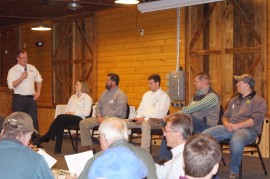
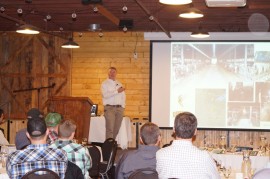
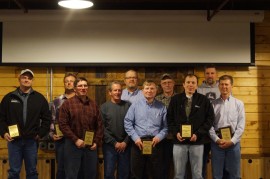
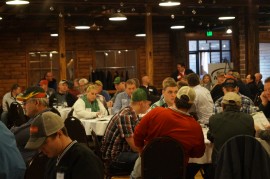
Our Central Advantage team held their annual mtg on Jan 15th. Growers that have utilized the Central Advantage program for 10 years were recognized and presented with a plaques from their CA team member. Presentations were provided by Kevin Kruize, Central Advantage Manager, Kate Stenzel, CA Sales Agronomist, Larry Stoller, Affiliate & Industry Relations Manager at U.S. Farmers & Ranchers Alliance. Johnathan Zuk, Region Agronomist and also a Panel of guests from IL and IA, shared their insights on precision agriculture.

DSC02787

DSC02880

DSC02902

DSC02910


Nitrate Management is Key by Kate Stenzel

nitrate now


Nitrogen management is a key factor in maximizing yields and return on investment. By more intensively managing nitrogen applications and timing to crop needs, excess nitrogen application can be minimized. The Minnesota Department of Ag (MDA) encourages the implementation of best management practices (BMPs) which is defined by the three criteria of rate, timing, and method. This fall the MDA has released a revised version of the Nitrogen Fertilizer Management Plan (NFMP). Regulations will now be developed by the MDA through a rule making process which will include two parts. The first proposed rule will restrict fall and winter applications of nitrogen fertilizer in areas vulnerable to groundwater contamination. These restrictions will vary for different regions. The second proposed regulations will put into law the approach outlined in the NFMP.

While regulations on nutrient application, especially nitrogen, have been discussed for years these steps being made by the MDA must be taken seriously. Central Advantage has been working on approaches to help our customers be in the best position to meet these requirements. The nitrogen management tools we have been researching and developing are available and will allow growers to still maximize yield potential and return on investment, while minimizing over-application of nitrogen. Central Advantage has access to precision technology tools that quickly and accurately measure soil nitrate levels. The NitrateNow program has been developed over the past three years and offers solutions for intensive nitrogen management. A variety of options are available such as testing a few composite nitrate soil samples to the preferred method of pulling geo-referenced soil nitrate samples. By grid nitrate sampling a field, 12”soil cores are pulled and GPS referenced. These can then be used to create a variety of variable rate nitrogen application recommendations based on the nitrate test results and historical productivity of the field. By utilizing the NitrateNow program soil nitrate samples can typically be pulled and a variable rate application rec can be available to the grower within 24 hours.

To learn more about the NitrateNow program and how you can better manage your nitrogen inputs, please contact your Central Valley Agronomist.


holiday2

christmas photo1

Central Advantage recieves an award for being an Industry Leader

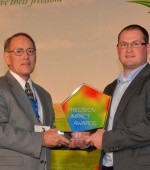
Central Valley Coop was recognized at the Agronomy Retailers Association Conference for winning the Precision Impact Award for the North Region of the United States. Three awards were given by ARA and AgProfessional Magazine to a local retailer for their excellence in incorporating precision agriculture into the retail operations as well as their customer’s operations. We are honored at Central Valley to receive such an achievement in the rapidly growing space of Precision Agriculture. The award was based on 5 areas of criteria Input Efficiency, Grower Engagement, Stewardship for the Environment, Innovative Use of Technology, and Bottom Line Profitability for Customer and Retailer. When our Central Advantage team heard about this award at the Info Ag Conference this past summer we were very excited to Mapapply. We felt like it was a perfect fit since these 5 areas are exactly what we work to achieve everyday with the Central Advantage program. Central Advantage partners with its customers to create the best recommendations for each individual acre. This creates optimum input efficiency and implements environmental stewardship all along adding to the grower’s bottom line. We accomplish this thru learning centers, precision ag tours and our annual conference where we bring new ideas and education to our customers and ourselves . Central Advantage is now on its 11th year of data analysis and variable rate operations. We have worked side by side with our customers over the years pushing each other to deliver the best results and recommendations. We look forward to serving all of Central Valley’s customers withKevin shaking handsARA precision agriculture and with the drive of our customers’ needs and enthusiasm of our Central Advantage staff we are all going to have a great future in precision agriculture.
We would like to say Thank You to all of our Central Advantage members for working with our team and making us one of the best in the Industry.agprofessionals


All news posts »